Shooting pain from your lower back or buttock down the back of your leg is frightening. We hear it described every week at our Sector 58 clinic: like an electric current or a hot wire, sometimes with tingling or numbness in the foot. It has a name, sciatica, and although it sounds serious, most cases respond well to well-planned physiotherapy.
Sciatica is not a diagnosis but a symptom pattern: a nerve root in the lower back, usually L4, L5 or S1, is irritated or compressed. Our job in the first session is to find out why, because each cause gets different treatment.
What sciatica actually is
The sciatic nerve is the longest nerve in your body, formed by nerve roots leaving the lower spine and running down the back of each leg. When one of those roots is inflamed or pinched, the brain feels pain along the whole nerve path, which is why the problem sits in your back but the pain shows up in your calf or foot. Pain that travels below the knee, often with tingling or numbness, is the hallmark of true sciatica.
The three common causes
Almost every case we assess comes down to one of these three: disc bulge or herniation, where disc material presses on a nerve root and typically worsens with sitting and coughing; piriformis syndrome, where a tight deep buttock muscle irritates the nerve and mimics a disc problem; and spinal stenosis, age-related narrowing of the canal that causes leg heaviness with walking which eases when you sit or lean forward.
Red flags: when to see a doctor quickly
Most sciatica is not dangerous, but a few signs deserve urgent medical attention. See a doctor promptly for saddle-area numbness, new bladder or bowel difficulty, rapidly worsening leg or foot weakness, severe pain after trauma, or back pain with fever, unexplained weight loss, or pain that eases in no position. These are uncommon, but they are why every assessment starts with screening.
How we assess sciatica at ART
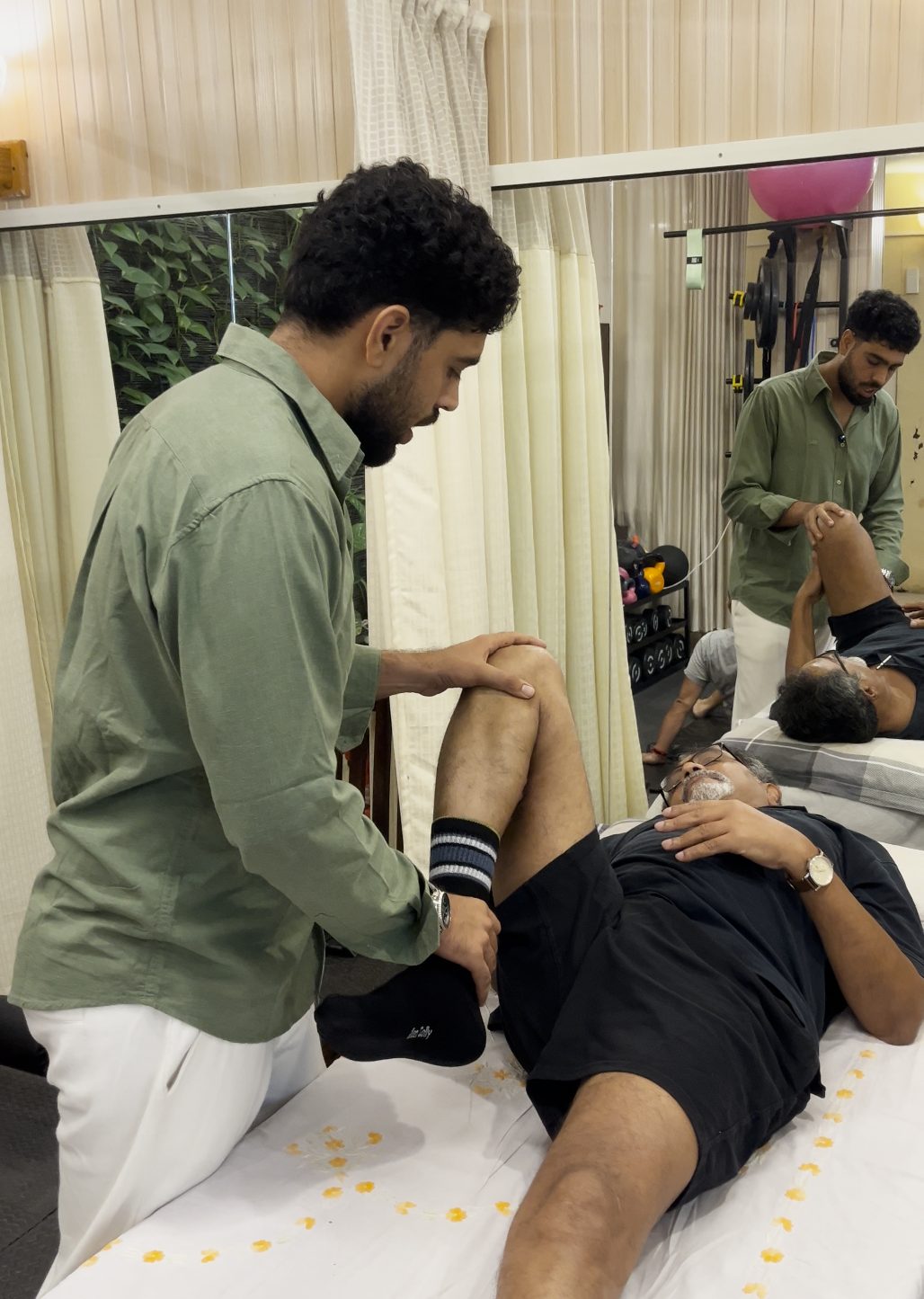
A good assessment is detective work. We take your history, then run a focused neurological screen of reflexes, sensation and leg strength, plus movement testing including the straight-leg raise, which distinguishes nerve irritation from joint or muscle pain well. We also check hip stiffness, core strength and lifting mechanics, because these drive recurrences. An MRI is not always needed at the start; we recommend imaging for red flags, poor progress, or planning an injection or surgical opinion.
How physiotherapy actually fixes it
Treatment has three layers, and skipping any of them is why so many people relapse a year later. Calm it down: manual therapy to stiff spinal and hip joints, soft-tissue release around the piriformis and glutes, and gentle nerve glides that help the irritated nerve root move freely again. Rebuild capacity: core and hip strength training with graded loading of the back, so the spine is stronger than the demands placed on it. Change the habits: prolonged sitting is the biggest driver we see in desk-working Gurugram patients, so we rework how you sit, lift, sleep and break up long desk hours.
Most sciatica settles with the right rehab. A disc heals the same way any tissue heals: gradually, if you give it the right loading and enough time.
What a typical timeline looks like
Mild to moderate sciatica often improves noticeably within four to six weeks of consistent treatment. More severe nerve irritation, especially with weakness or numbness, can take eight to twelve weeks or longer, and a small percentage of cases eventually need an injection or surgical opinion. After your assessment we give you a clear estimate with clear milestones: pain settling, strength returning, walking tolerance improving. If progress stalls, we reassess rather than repeat the same sessions.
Simple things you can do at home
- Keep walking. Short, frequent walks beat one long one.
- Avoid long bed rest. A day of rest is fine; a week in bed usually makes sciatica worse.
- Break up sitting. Stand and walk for two minutes every 30 to 45 minutes.
- Use heat, not aggressive stretching. A warm pack eases muscle guarding; forcing hard stretches through sharp leg pain can irritate the nerve further.
- Sleep comfortably. Side-lying with a pillow between the knees, or on the back with a pillow under the knees, works for most patients.
Should I get an MRI before starting physiotherapy?
Usually not. A clinical examination tells us enough to start effective treatment, and many disc bulges heal without ever needing an image. We recommend an MRI for red flags, poor progress, or planning an injection or surgical opinion.
Is bed rest good for sciatica?
No. Beyond a day of rest during the very worst phase, staying in bed tends to stiffen the joints, weaken the muscles and prolong the pain. Gentle, regular movement within tolerable limits is one of the strongest predictors of a faster recovery.
When should I see a doctor about my sciatica?
Seek prompt medical advice for any red flags listed above, or if symptoms persist beyond a few weeks of good physiotherapy without meaningful improvement.
If your leg pain has lingered for weeks, or numbness and weakness are part of the picture, book an in-person assessment and we will map out what is irritating the nerve and what your recovery should look like.