An ACL tear is one of the most disruptive injuries in sport. One awkward landing or twist, and you are looking at months of rehabilitation before you can trust your knee again. Whether you have had surgery or are rehabbing the knee conservatively, the first 12 weeks decide the whole trajectory of your recovery.
This is also where most rehab goes wrong: patients leave hospital with a photocopied sheet of knee bends and no supervision until something goes badly. A proper ACL programme is phased, supervised and criteria-based. Here is how we structure the first 12 weeks.
Phase 1: calm the knee (weeks 0 to 2)
The knee is swollen, sore and will not fully straighten. The goals are simple: reduce swelling, wake the quadriceps up, and restore full knee extension. A knee that cannot fully straighten develops a limp and loses quad function fast.
The work includes ice and compression, gentle heel slides, and straight-leg raises and quad sets to reactivate the thigh muscle. If you have had surgery, your surgeon's protocol governs weight bearing, and we progress walking aids only when your gait is clean without them.
Phase 2: restore motion and control (weeks 2 to 6)
With the swelling settling, the job is to get a full, symmetric range of motion and a normal walking pattern. Limping for weeks is not harmless: it loads the other leg and the lower back abnormally, and it is one of the habits we work hardest to prevent.
Strength work begins but stays closed-chain, with the foot on the ground. Mini squats, step-ups, glute bridges and single-leg balance drills rebuild the muscles around the knee without stressing the healing graft or the joint. We also add stationary cycling once bending allows it, which is excellent for regaining motion with low joint load.
Phase 3: rebuild strength (weeks 6 to 12)
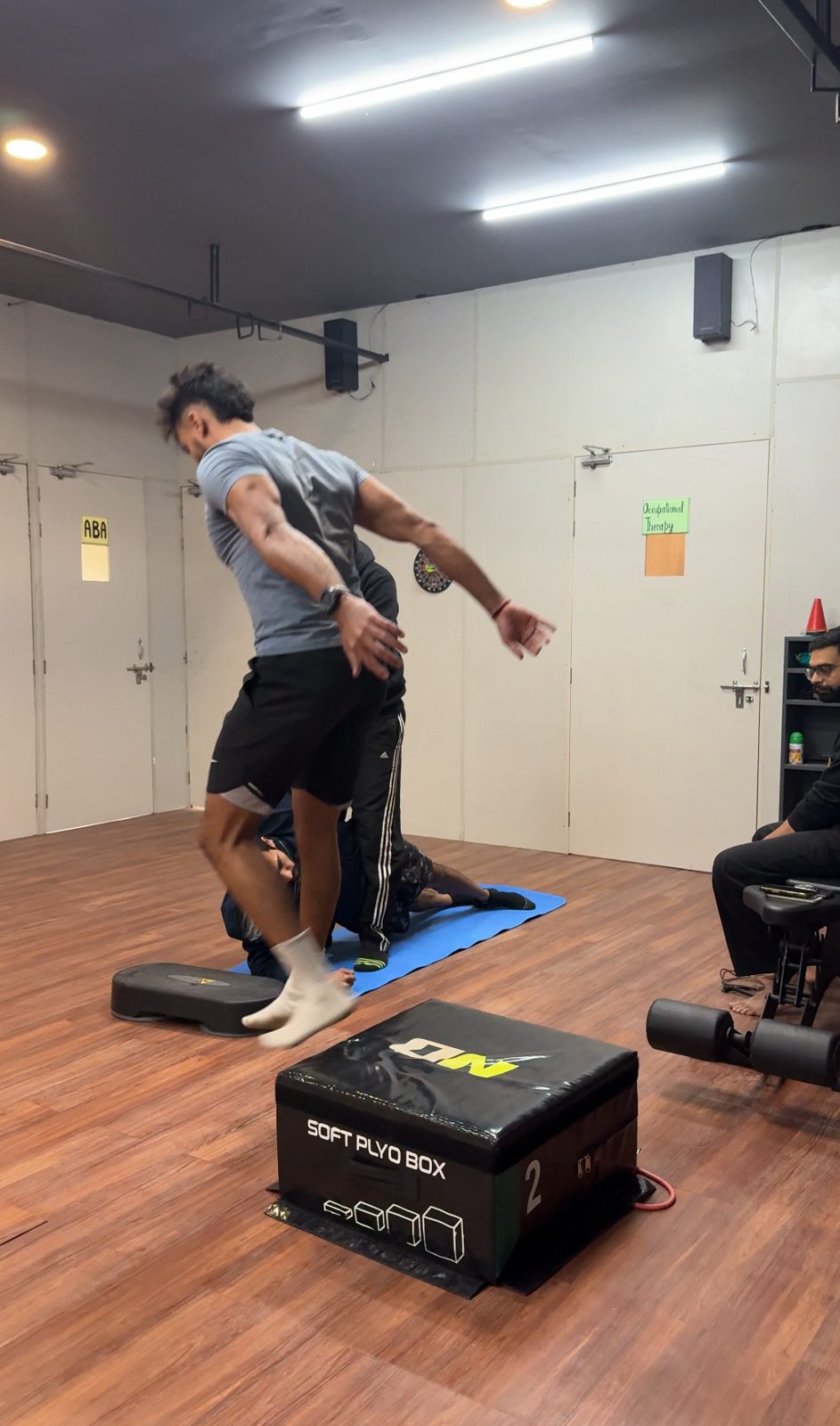
This is where ACL rehab becomes athletic training: progressive resistance with leg press, hamstring curls, split squats and calf work, moving to single-leg strength exercises as milestones allow. Hamstrings get special attention because they protect the ACL by resisting the forward slide of the shin. Balance and landing mechanics enter now too: learning to land softly with good knee alignment is the most trainable defence against re-injury.
Return-to-run criteria at roughly 12 weeks
Twelve weeks is a checkpoint, not a permission slip. We clear straight-line jogging only when swelling has settled, range is full and symmetric, gait is normal, and quad and hamstring strength meet benchmarks against the uninjured side. Starting to run before these gates are passed is a common cause of setbacks.
Why strength is the whole game
The surgery fixes the ligament, but only strength protects it afterwards: quad and hamstring weakness at the end of rehab is one of the strongest predictors of a second ACL tear. That is why our programme is built around measurable strength targets, not a calendar date. If the injured leg still tests meaningfully weaker than the other side, you stay in the strength phase. An extra month of strengthening beats another year of rehab after a re-tear.
The role of the hydrotherapy pool
Our clinic has a hydrotherapy pool, and early ACL rehab is one of its best uses. Water unloads the knee while adding gentle resistance, so patients can practise walking patterns, squats and balance work in the pool weeks before they can do the same volume on land. It is especially valuable in the first month after surgery, when swelling and pain limit land-based training.
ACL rehab is not time-based, it is criteria-based. You earn each phase by passing tests, not by watching the calendar.
Criteria-based, not calendar-based
Every phase ends with gates: measurable tests of swelling, range, strength and movement quality. Pass them and you progress; fail them and we address the deficit. If your current rehab is "come back in six weeks and we will see," you are not on a criteria-based programme, and that gap is what separates a knee that survives sport from one that gets re-injured.
Do I need surgery for a torn ACL?
Not always. Patients who want to return to pivoting sports usually need a reconstruction, but many with partial tears or lower sporting demands do well with structured conservative rehab. The decision depends on instability, associated injuries and your goals, and we refer to an orthopaedic surgeon when surgery looks like the right call.
Can I walk normally right after ACL surgery?
Weight bearing depends on your surgeon's protocol and the type of surgery. Most patients walk with crutches in the first days and wean off them as swelling settles and gait normalises, usually within one to two weeks. Your physiotherapist will confirm when your gait is clean enough to drop the support.
When can I return to sport after an ACL injury?
Return to pivoting sport typically takes nine to twelve months, and only after passing strength, hop and movement tests, not on time alone. Returning earlier with a weak or asymmetric knee substantially raises re-tear risk. The first 12 weeks are the foundation; the months after build sport-specific capacity.
If you have torn your ACL or just had surgery and your rehab feels vague, come in for an in-person assessment. We will test where your knee is and map out a phased, criteria-based plan back to your sport.