A shoulder that won’t lift, reach or sleep comfortably needs staged, patient rehab — not rest alone. We treat frozen shoulder and rotator cuff problems at every stage, from the first painful weeks to full overhead strength.
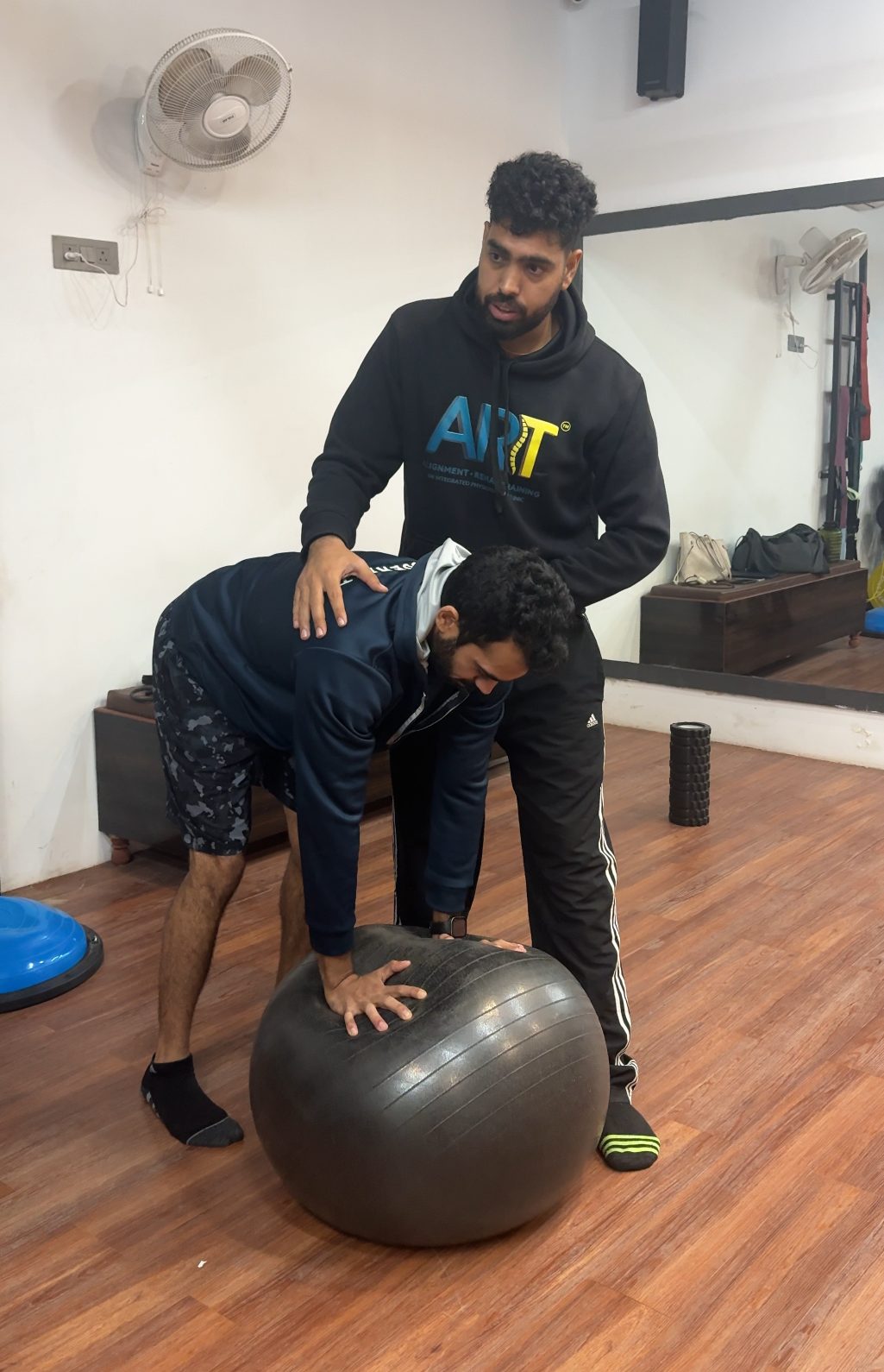
Shoulder problems are frequently misdiagnosed — a frozen shoulder, a cuff tear and impingement can feel alike but need very different treatment. Your first session separates them properly.
Every plan follows the ART method — Alignment to find the cause, Rehab to treat it, Training to make it last.
Measure range, test cuff strength and assess scapular control to separate a true frozen shoulder from cuff or joint issues.
Graded joint mobilisation and soft-tissue work matched to your stage — aggressive stretching too early can backfire.
Progressive rotator cuff and scapular strengthening — the engine of a healthy, stable shoulder.
Graded return to lifting, sport and daily reaching, tested rather than guessed.
Shoulder rehab rewards patience and precision. If you have been told to “just rest it” for months with no improvement, this service is for you.
Frozen shoulder has three phases — freezing, frozen and thawing. Treatment that works in one phase can irritate another, which is why staging your shoulder correctly at the first visit matters so much. Learn more on our frozen shoulder treatment page.
The natural course runs 12–24 months, but structured physiotherapy typically shortens the painful phase and restores far more movement than waiting it out. Most patients see meaningful change within 6–8 weeks.
No. Many partial tears and tendinopathies recover fully with progressive loading. We assess the tear, your age and your demands, and refer for a surgical opinion only when rehab can’t meet the goal.
Complete rest stiffens a frozen shoulder further. The answer is the right movement at the right dose — which is exactly what your program will define.
Recurrence in the same shoulder is uncommon, though the other shoulder is affected in up to a third of people. Maintaining cuff and mobility work keeps the risk low.
Book an assessment at our Sector 58 clinic — open daily 7:00 AM – 9:00 PM. Your first session includes a full movement evaluation and a clear treatment plan. Rated 5.0 across 190+ Google reviews.