Some muscle knots don't respond to pressure alone. Dry needling uses a fine filament needle to reach deep trigger points directly — switching off the spasm, restoring blood flow and giving stubborn pain a reset it can't get any other way.
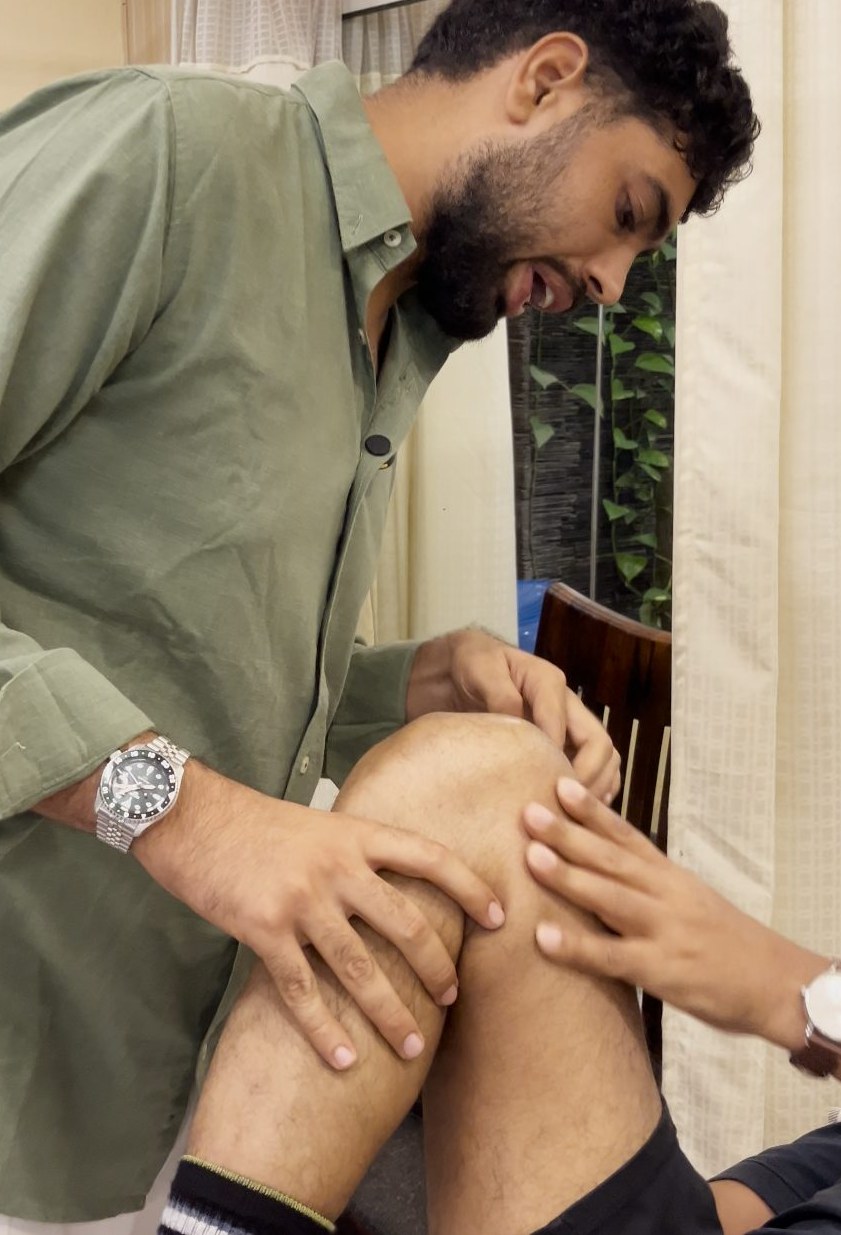
A trigger point is a small patch of muscle locked in spasm. Needling it precisely produces a brief local twitch — the muscle letting go — followed by lasting relief as circulation returns.
Every plan follows the ART method — Alignment to find the cause, Rehab to treat it, Training to make it last.
We palpate and test to confirm the trigger points driving your symptoms — needling is only used where it's genuinely indicated.
A sterile, single-use filament needle is guided into the trigger point. You'll feel a brief twitch, then the muscle releases.
Gentle activation and mobility work immediately after needling retrains the muscle to work through its full range.
Targeted strengthening of the weak neighbours that forced the muscle into spasm — so the knot doesn't return.
Dry needling is for pain that has a muscular driver and hasn't yielded to stretching, massage or rest alone.
Dry needling is not acupuncture. It targets anatomical trigger points based on Western musculoskeletal assessment — no meridians, no guesswork, just precise neuromuscular treatment.
Most people feel a brief cramp-like twitch as the trigger point releases, then relief. The needles are far thinner than injection needles, and sessions are brief.
Yes, when done by a trained physiotherapist. We use sterile single-use needles, precise anatomical technique, and we screen every patient for contraindications first.
Many patients feel a clear difference in 1–3 sessions for a single problem area. Chronic or multi-area issues are needled as part of a broader rehab plan.
Mild post-needling soreness for 12–24 hours is common and normal — like the day after a good workout. It settles on its own.
Book an assessment at our Sector 58 or Sushant Lok clinic — open daily 7:00 AM – 9:00 PM. Your first session includes a full movement evaluation and a clear treatment plan. Rated 5.0 across 190+ Google reviews.