Those circular marks athletes wear are not bruises from injury — they are from cupping, a therapy that lifts tissue instead of pressing into it. Suction cups draw skin and fascia upward, increasing local blood flow and giving tight, overworked muscles a different kind of release than massage or needling can offer. At ART Physiotherapy Clinic in Sector 58, we use cupping for stubborn back tightness, shoulder knots, IT-band irritation and post-training soreness that keeps returning despite stretching. It is particularly effective combined with our hydrotherapy pool sessions, where warm water and cupping together settle deep muscular tension. A session leaves temporary marks that fade within days — the relief typically lasts far longer. Cupping is never a standalone fix in our clinic; it is one tool inside a full assessment and treatment plan built on the ART method. If foam rolling and rest have stopped working on your tight spots, this is the next step worth trying.
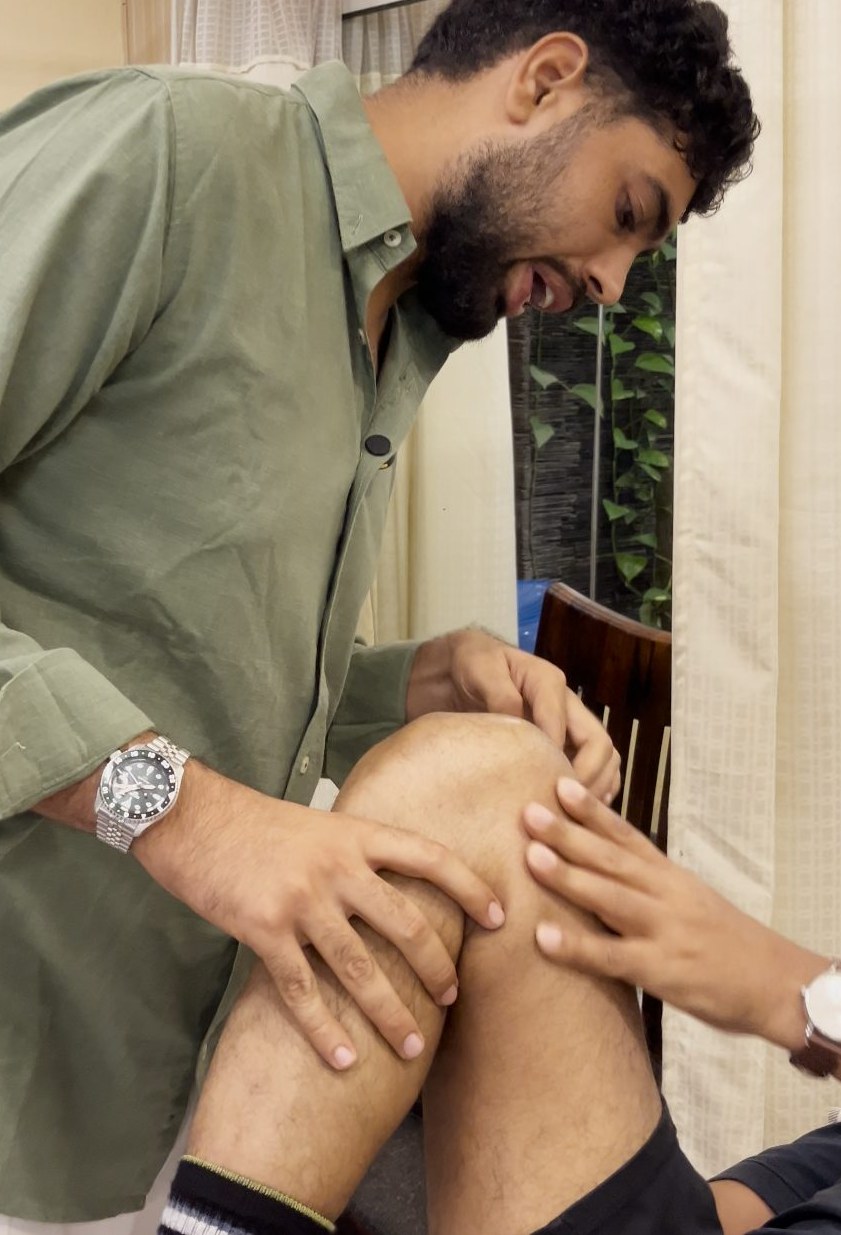
Cupping lifts tissue instead of pressing into it, driving blood flow where chronic tightness lives. We use it as one tool inside a full, assessed treatment plan.
Every plan follows the ART method — Alignment to find the cause, Rehab to treat it, Training to make it last.
We palpate and test to find the tissue that is genuinely driving your symptoms — cupping is placed with purpose, not by routine.
Cups are placed on the identified areas for a controlled period, decompressing tissue and driving local blood flow.
Gentle mobility work while or after cups are applied helps the freed tissue move through its full range.
Targeted strengthening follows, so the tight muscle has the support it needs and the problem does not return.
Cupping suits muscular tightness that stretching, foam rolling and rest have stopped shifting.
Marks fade; relief lasts. Cupping leaves temporary circular marks that clear within days. It is never a standalone fix here — always one tool inside an assessed, structured plan.
No — the marks are painless and fade within a few days. Most people feel immediate lightness and easier movement in the treated area.
Yes, when done by a trained physiotherapist. We screen for contraindications, such as certain skin conditions and blood-thinning medication, before every session.
Massage presses tissue down; cupping lifts it up, decompressing the area and driving blood flow differently. They complement each other rather than compete.
Yes — it is one of our most effective combinations. Warm-water therapy followed by cupping settles deep muscular tension that neither fully resolves alone.
Book an assessment at our Sector 58 or Sushant Lok clinic — open daily 7:00 AM – 9:00 PM. Your first session includes a full movement evaluation and a clear treatment plan. Rated 5.0 across 190+ Google reviews.