Tennis elbow rarely comes from tennis. It comes from keyboards, tools, gym grips and anything repeated ten thousand times — the forearm tendons simply lose the loading battle. Rest feels like the answer, but rest alone rarely fixes tendinopathy; tendons need graded load to remodel. At our Sector 58 clinic we assess grip strength, wrist mechanics and elbow loading, then prescribe the progressive programme the evidence supports: isometric holds first, then slow heavy loading, plus dry needling or manual therapy to settle the irritable tissue. Most cases resolve without injections when loading is managed correctly — the cortisone shortcut often weakens the tendon long-term. Whether you lift, type or play a racquet sport, the goal is the same: a pain-free grip and a tendon stronger than before it hurt. If shaking hands, lifting a kettle or turning a key still stings after weeks of rest, your elbow needs loading, not more waiting.
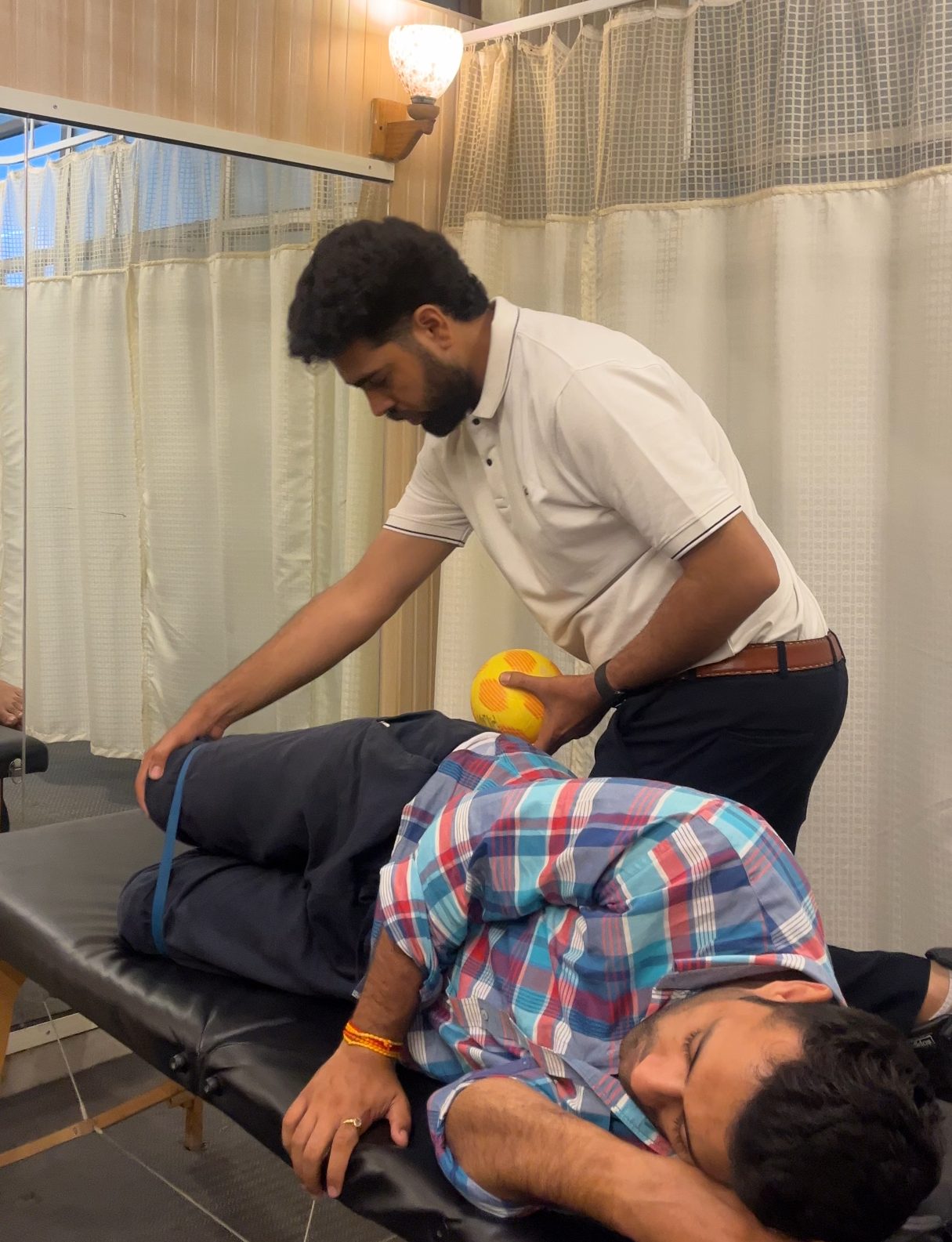
Tennis elbow announces itself through grip. Here is what we assess and treat:
Tennis elbow is a loading problem, not an inflammation problem — the tendon lost the battle against repetition.
Every treatment plan at our Sector 58 clinic runs on three pillars — Alignment, Rehab and Training.
Grip strength testing and load history to grade the tendinopathy — so loading starts at exactly the right dose.
Isometric holds first, then slow heavy loading — the programme the evidence supports — plus dry needling or manual therapy to settle irritable tissue.
Progressive grip and forearm strengthening plus technique coaching, so the tendon comes back tougher than it was.
Related care: stubborn tendon pain also responds to Dry Needling, and grip-intensive athletes benefit from our Sports Injury Rehabilitation programmes.
With proper loading, most cases improve significantly in 8–12 weeks. Tendons remodel slowly — patience with the programme beats rushing it.
We usually advise against it as a first step: injections often weaken the tendon long-term. Graded loading fixes the cause.
A counterforce brace can ease symptoms during activity, but it is a crutch, not a cure. Use it alongside rehab, not instead of it.
Usually yes, with modified loading. Complete rest deconditions the tendon; smart, graded loading heals it.
Book an assessment at our Sector 58 or Sushant Lok clinic — open daily 7:00 AM – 9:00 PM. Your first session includes a full movement evaluation and a clear treatment plan. Rated 5.0 across 190+ Google reviews.