Shoulder pain has a cruel signature: it hurts most when you reach overhead, lie on it, or try to sleep — the three things you cannot avoid. Impingement, rotator cuff irritation and bursitis share one theme: the shoulder’s mechanics are off, and rest just deconditions the muscles that should protect it. At ART in Sector 58 we test rather than guess — which movements provoke pain, which muscles have switched off, whether the neck is referring symptoms downward. Treatment combines manual therapy to restore glide, progressive rotator-cuff and scapular strengthening, and retraining the movement patterns that caused the overload. Most shoulder impingement resolves without surgery when loading is corrected early. If reaching into a back seat, lifting a bag overhead or sleeping on your side has become a negotiation, your shoulder needs mechanics, not more rest. Frozen shoulder and rotator cuff tears get dedicated care on our frozen shoulder page.
Shoulder impingement has a cruel signature — it hurts most at the things you cannot avoid:
Impingement, cuff irritation and bursitis share one theme — the shoulder’s mechanics are off.
Every treatment plan at our Sector 58 clinic runs on three pillars — Alignment, Rehab and Training.
Provocation testing identifies which structure is involved and whether the neck is referring symptoms — so treatment targets the true driver.
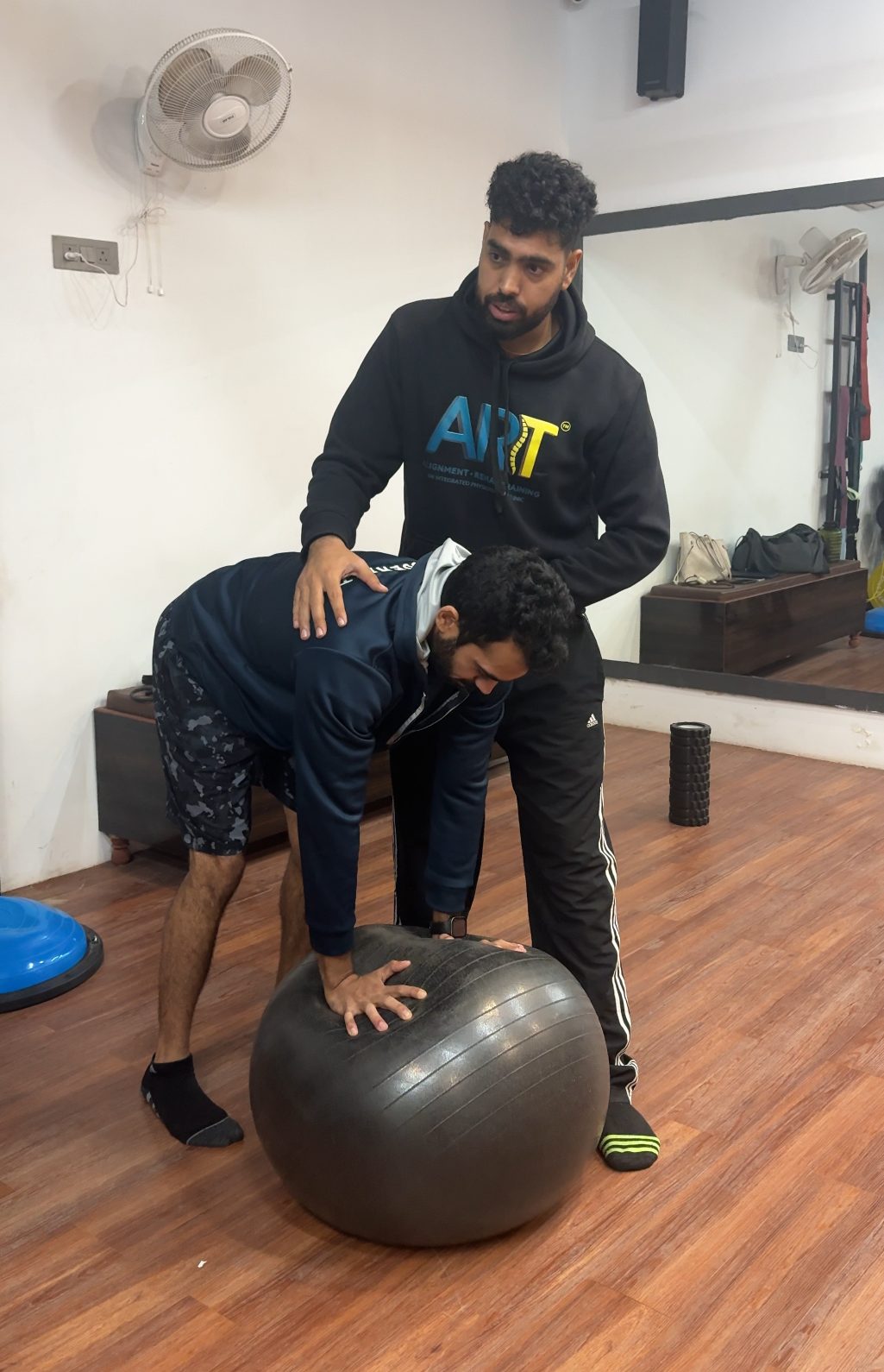
Manual therapy to restore joint glide, then progressive rotator-cuff and scapular strengthening matched to your stage.
Movement coaching for reaching, lifting and sport — so the mechanics that caused the overload don’t recreate it.
Related care: frozen shoulder and rotator cuff tears get dedicated care on our Frozen Shoulder page and Frozen Shoulder & Rotator Cuff service.
Most cases resolve without surgery when loading is corrected early. We refer promptly if red flags or full-thickness tears appear.
Complete rest deconditions the very muscles that protect it. We modify — not stop — activity while rebuilding strength.
Many impingement cases improve markedly in 6–10 weeks of consistent rehab. Chronic cases take longer but still respond well.
Usually not — painless clicking is common and harmless. Painful catching or locking deserves assessment.
Book an assessment at our Sector 58 or Sushant Lok clinic — open daily 7:00 AM – 9:00 PM. Your first session includes a full movement evaluation and a clear treatment plan. Rated 5.0 across 190+ Google reviews.