Shooting pain down one leg, numbness in the foot, sitting that becomes unbearable — sciatica is miserable, but it is also one of the most treatable nerve pains when the true cause is identified. At ART we diagnose whether your sciatica comes from a disc, the piriformis muscle or the spine’s joints — because each needs different treatment.
If several of these sound familiar, your sciatic nerve is likely irritated — and the sooner the cause is identified, the faster it settles.
Sciatica is a symptom, not a diagnosis — it means the sciatic nerve is irritated somewhere along its path. The treatment that works depends entirely on where.
Every treatment plan at our Sector 58 clinic runs on three pillars — Alignment, Rehab and Training.
Neurological testing, movement screening and, where needed, correlation with your MRI to determine whether the driver is disc, muscle or joint.
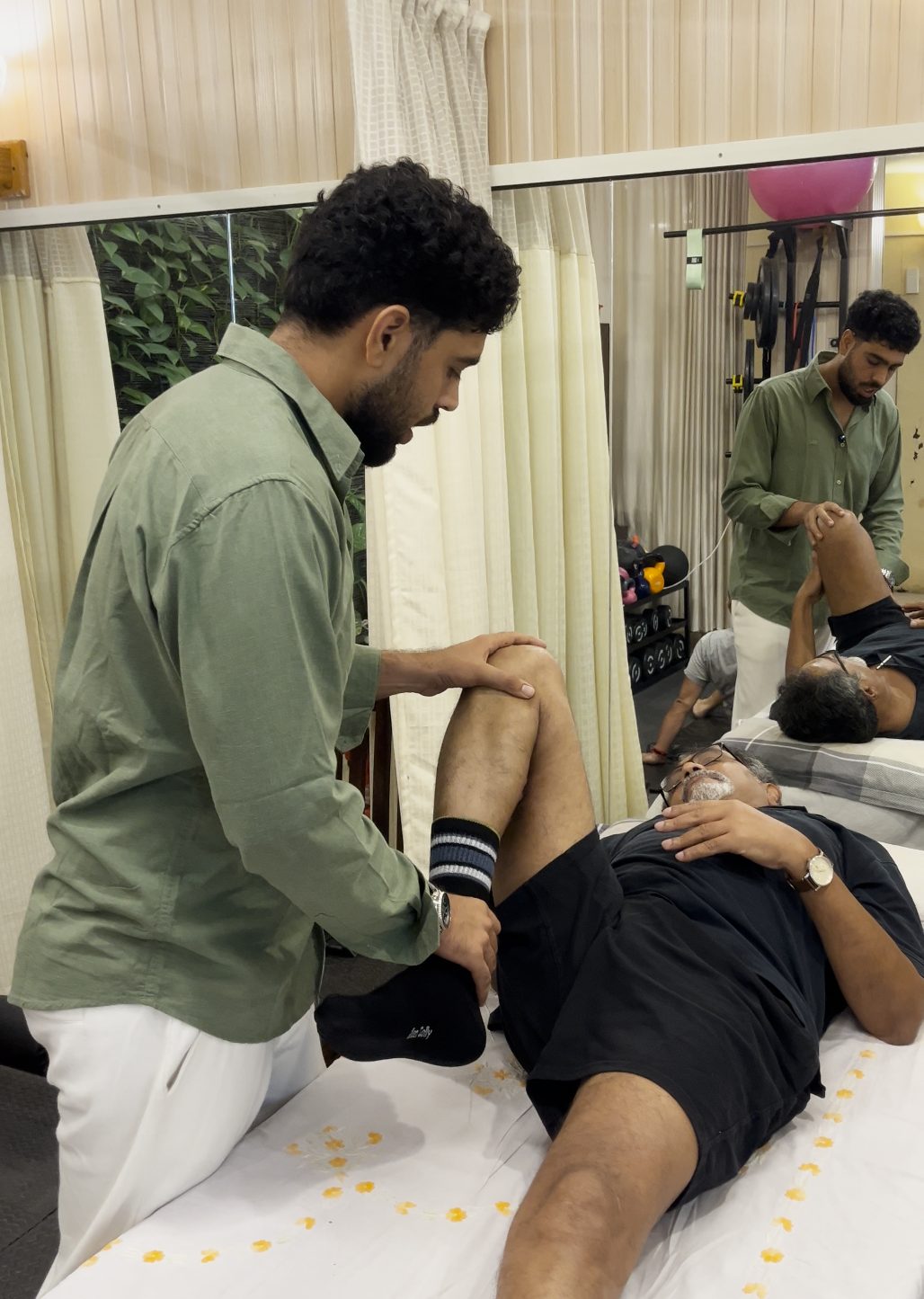
Manual therapy, nerve mobilisation (neural glides) and graded movement to reduce irritation and restore pain-free motion.
Core, glute and hip strengthening plus sitting and lifting mechanics, so the nerve stays uncompressed for good.
Related care: sciatica is treated hands-on through our Back & Sciatica Care service, led by Dr. Akshay Sharma at our Sector 58 clinic.
Yes, in the large majority of cases. Around 90% of sciatica resolves with conservative care — accurate diagnosis, manual therapy and progressive exercise. Surgery is reserved for severe or non-resolving cases.
Acute sciatica often improves within 4–6 weeks of targeted treatment; long-standing cases take longer. Your first assessment will give you a realistic timeline.
Prolonged bed rest worsens outcomes. Gentle, guided movement — especially walking and specific nerve glides — speeds recovery. We’ll show you exactly what to do and what to avoid.
Saddle numbness, new bladder or bowel problems, or rapidly worsening leg weakness need immediate medical attention — these can signal cauda equina syndrome.
Book an assessment at our Sector 58 clinic — open daily 7:00 AM – 9:00 PM. Your first session includes a full movement evaluation and a clear treatment plan. Rated 5.0 across 190+ Google reviews.