A knee that buckles, swells after sport or aches on every staircase deserves a precise diagnosis — because a torn ACL, a tracking problem and early arthritis need completely different plans. We test, we measure, and we rebuild knees to be stronger than before the injury.
Knee problems announce themselves clearly. Here is what we assess and treat every day:
Knee pain is rarely just a knee problem — weak hips and quads sit behind a surprising share of it. Accurate diagnosis separates structural injuries from movement-driven pain.
Every treatment plan at our Sector 58 clinic runs on three pillars — Alignment, Rehab and Training.
Clinical ligament and meniscus testing, strength measurement and movement analysis to separate tears from tracking and wear-and-tear problems.
Swelling and range first, then progressive quad, hamstring and hip strengthening matched to your diagnosis and goals.
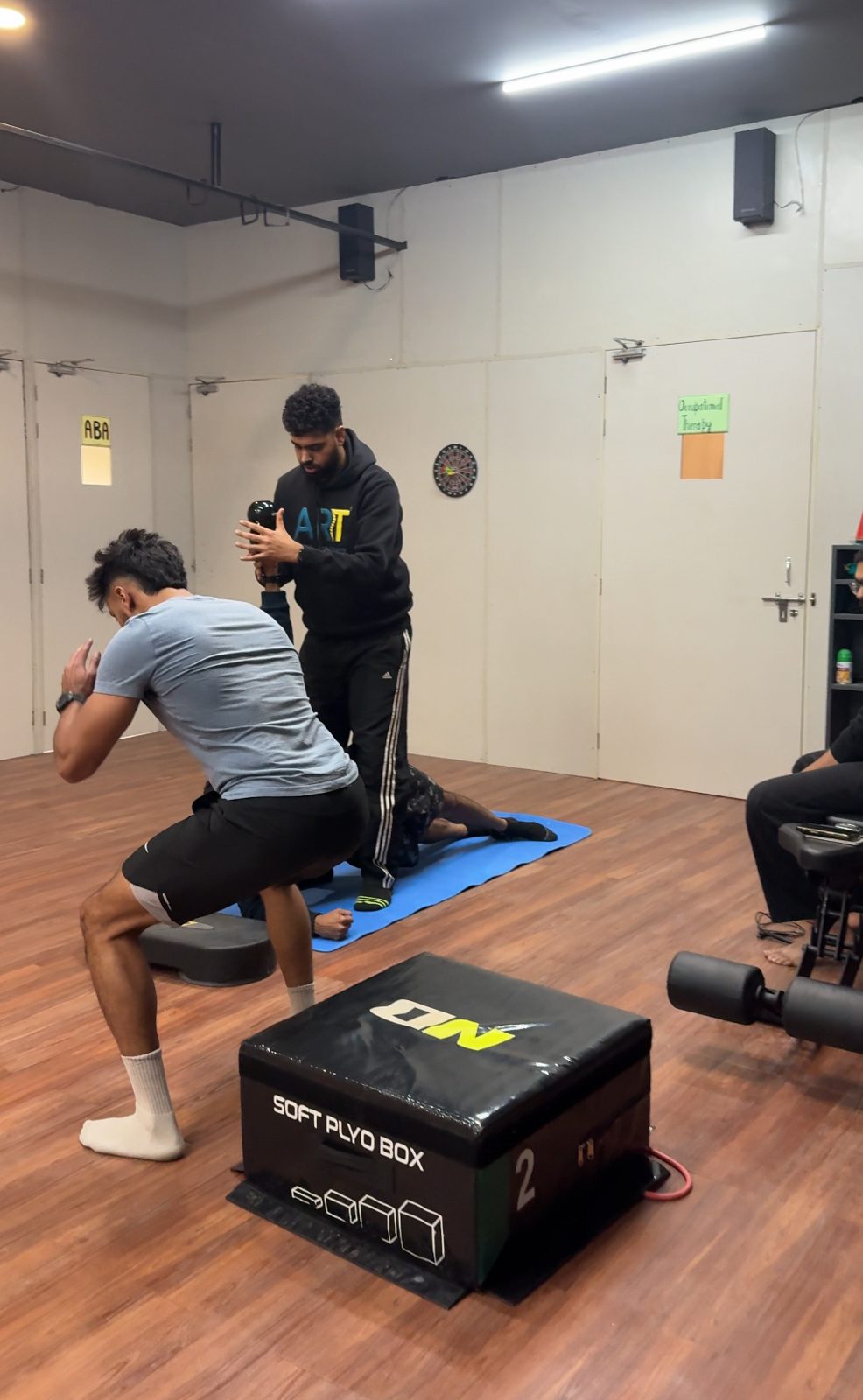
Agility, landing mechanics and return-to-sport testing on our turf and gym floor — so the knee is tested before it’s trusted.
Related care: knee injuries are rehabbed through our Sports Injury Rehabilitation and Post-Surgery Rehabilitation services at our Sector 58 clinic.
No. Active people in pivoting sports usually benefit from reconstruction, but many others return to full activity — including sport — with structured non-surgical rehab. We assess your knee, your goals and the evidence, honestly.
For early to moderate arthritis, yes — strengthening the quads and hips measurably reduces pain and can delay surgery. Severe bone-on-bone arthritis may still need a surgical opinion.
When strength symmetry, hop testing and pain-free loading say so — typically 8–12 weeks for minor injuries, 9–12 months after ACL reconstruction.
Compensation. You offload the injured knee onto the healthy one and overload it in turn. Rehab addresses both sides — the injured knee and the patterns that spread the problem.
Book an assessment at our Sector 58 clinic — open daily 7:00 AM – 9:00 PM. Your first session includes a full movement evaluation and a clear treatment plan. Rated 5.0 across 190+ Google reviews.