If your shoulder aches at night, won’t reach the top shelf and barely rotates behind your back, you may have adhesive capsulitis — frozen shoulder. It is slow and stubborn, but staged physiotherapy shortens the painful phase and restores far more movement than waiting it out.
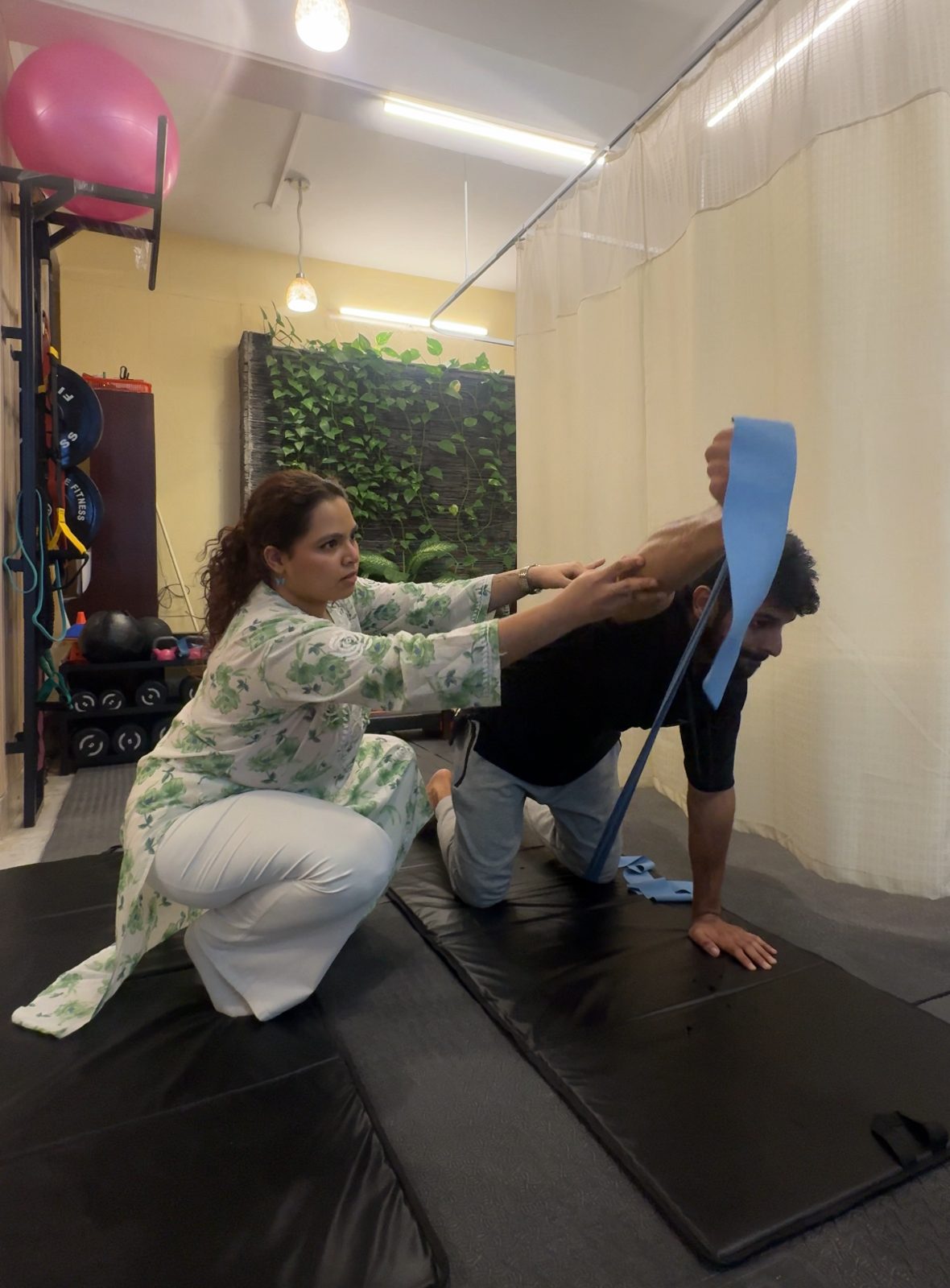
Frozen shoulder typically develops over weeks without a clear injury. These are its calling cards:
Frozen shoulder is inflammation and thickening of the shoulder capsule — but why it started, and what stage you are in, determines the treatment.
Every treatment plan at our Sector 58 clinic runs on three pillars — Alignment, Rehab and Training.
We determine your phase (freezing, frozen or thawing) and rule out cuff tears or arthritis — because the wrong treatment at the wrong stage backfires.
Graded joint mobilisation and soft-tissue work matched to your stage, progressing as the capsule allows.
Rotator cuff and scapular strengthening so the regained movement is controlled, stable and lasting.
Related care: frozen shoulder is treated through our dedicated Frozen Shoulder & Rotator Cuff Care service at our Sector 58 clinic.
Untreated, 12–24 months through three phases. With staged physiotherapy, the painful phase shortens and most patients regain functional movement within 3–6 months.
Often partially — but many who wait are left with permanent stiffness. Active, staged rehab consistently produces better range and strength.
An injection can calm severe pain in the freezing stage and make rehab possible; it doesn’t restore movement on its own. We coordinate with your doctor when an injection would help.
Pendulum swings and gentle assisted movements in the early stage; progressive strengthening later. Your program will specify the dose — the wrong exercise at the wrong stage can flare things up.
Book an assessment at our Sector 58 clinic — open daily 7:00 AM – 9:00 PM. Your first session includes a full movement evaluation and a clear treatment plan. Rated 5.0 across 190+ Google reviews.